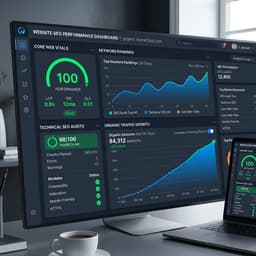

A 1-second delay in mobile page load drops conversion rates by up to 20%. See why modern businesses are discarding WordPress plugins in favor of custom Next.js engineering.
The Hidden Cost of Plugin Bloat
Traditional content management systems rely on a patchwork of dozens of third-party plugins to achieve basic functionality like caching, SEO meta tags, security, and contact forms. Each plugin injects heavy CSS, unoptimized scripts, and render-blocking database queries.
The result is poor Largest Contentful Paint (LCP) and terrible Cumulative Layout Shift (CLS) — the exact metrics Google actively penalizes in mobile search rankings.
Server Components & Edge Caching
Next.js App Router changes the paradigm by executing heavy JavaScript on the server. Zero unnecessary client bundle size is sent to the browser. The user receives pre-rendered, lightweight HTML and CSS that displays instantaneously.
When combined with Edge CDN caching, worldwide page response times drop below 200 milliseconds, ensuring search engine bots index every single page effortlessly within crawl budget allocations.
“Speed is not just a technical vanity metric; it is an economic driver. Shaving 800ms off load time produces an immediate, measurable uptick in organic search traffic and checkout conversion.”
— Zayn Alex, Principal Architect
FinPulse B2B Enterprise Portal
Results: 100/100 Lighthouse, 0.42s LCP

Zayn Alex
Principal Software Architect based at Metro Valley Digital Vancouver. Specializing in high-intent SEO architectures, paid acquisition funnels, and enterprise Next.js delivery.
Need Help Executing This for Your Business?
Talk directly with our senior growth strategists in Vancouver, Canada for a custom audit.